2026-10-06
What Is Chin Augmentation for a Recessed Chin?
Explains what a recessed chin (mu-teok) is and compares four chin augmentation options: chin filler, fat grafting, chin implants, and bone surgery, with key details on each.
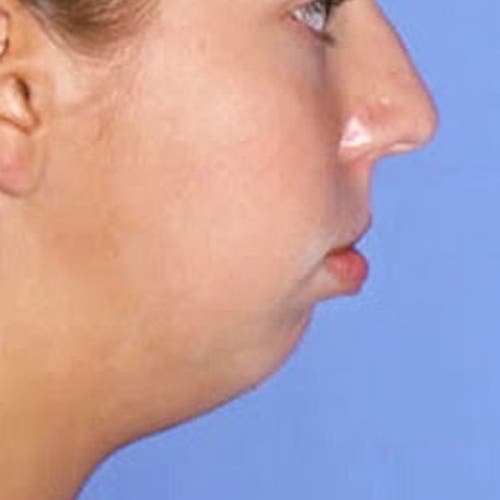


A well-defined chin brings the whole face to life! Chin augmentation!
Mu-teok refers to a chin that looks short or recessed backward,
and in relative terms, the face may also look as though it juts forward, like a bird's beak.

It can give an impression of weak willpower and instability.
Because the lips are hard to close naturally, forcing them shut can look awkward.
This facial shape is more common in Westerners than in East Asians.
From the side, the line from below the lower lip to the chin tip forms a slanted angle,
so the boundary with the neck appears blurred.
Types of Mu-Teok |

Normal bite with a recessed chin: The upper and lower jaws align normally, but the chin has not developed fully, so the position of the mandibular angle (jaw corner) is set farther back.
Deep overbite with a recessed chin: The gums protrude, which makes the chin look recessed while the face appears to jut forward.
Mu-Teok Surgery Methods |
There are generally four methods for chin augmentation.
Each surgical method is explained below.
1) Chin Filler | ||
2) Fat Grafting | ||
3) Chin Implant | ||
4) Bone Surgery |
1) Chin Filler
Chin filler is the simplest method, typically using about two syringes at roughly 1cc each.
The procedure takes about 10 minutes and is completed with a simple injection.
However, the results last about one year,
so the drawback is that repeat treatments are needed.


▲A case of chin filler treatment.
2) Fat Grafting
Fat is harvested from the thighs or abdomen and transferred to the chin.
However, the survival rate of grafted fat is around 50%,
so even if a generous amount is injected, about half will be lost.
Once the fat takes hold, however, the results are permanent.
If more volume is needed, additional fat can be grafted.
3) Chin Implant
Chin implant surgery involves making a 1–1.5 cm incision inside the mouth and inserting the implant.
The procedure itself takes about 15 minutes, though preparation may take a little longer.
It is performed under sedation and is a relatively simple surgery.
If you are not satisfied, the implant can be removed and the chin can return to its original state.
However, such cases are very rare.
Recovery time is also short.


▲A case of chin augmentation with an implant.

▲The implant placed in the chin.

1) Rounded front chin with a large lower face | ||
2) Short chin tip | ||
3) Blunt front chin that gives a dull impression | ||
4) Chin tip that is severely set back inward |
Chin implants are recommended for these cases.
Bone Surgery
This method involves cutting the bone in a V shape and advancing it forward.
General anesthesia is required.
The results are permanent, but recovery takes a long time.


Frequently Asked Questions
What does a recessed chin (mu-teok) mean?
Mu-teok refers to a condition in which the chin looks short or recessed backward. The face may also appear to jut forward, like a bird's beak. From the side, the line from below the lips to the chin tip slopes, making the boundary with the neck look blurred.
What methods are available for chin augmentation?
Chin augmentation is generally divided into four methods: chin filler, fat grafting, chin implants, and bone surgery. Each method differs in procedure time, duration of results, and recovery period.
How long do chin filler results last?
Chin filler results last about one year. The procedure takes around 10 minutes and is completed with a simple injection, although the drawback is that it needs to be repeated regularly.
Is recovery from chin implant surgery quick?
Yes, recovery from chin implant surgery is generally short. A 1–1.5 cm incision is made inside the mouth to insert the implant. The procedure is performed under sedation, and the surgery itself takes about 15 minutes. Preparation time may be a bit longer, however.
Are the results of fat grafting permanent?
Once the transferred fat takes hold, the results are permanent. However, the survival rate is about 50%, so roughly half of the transferred fat is lost even when a generous amount is injected. If more volume is needed, additional fat can be grafted.
How is bone surgery performed?
The bone is cut in a V shape and moved forward. General anesthesia is required. The results are permanent, but the recovery period is relatively long.